International School of Beijing · Summer 2026 · Ages 12–17 August 5–9, 2026 · By application
ISB Students · Aug 5–9, 2026 · By Application
  • 01 Learn AI skills.
  • 02 Start a company.
  • 03 Build something real.

An AI builder week, built exclusively for ISB students, grades 7–12. Five days. Limited seats. No prior coding required. By the final afternoon, August 9, you've shipped a real AI product — a live URL with your name on it, made by you in five days.

Apply for selection Read the premise
Cohort I · Selection-only
"The students
who start
companies now
choose the next
decade."
— Phillip An, Director
§ 01 — The Premise

Stop watching.
Start
building.

The most interesting kids your age aren't waiting for permission. They are picking real problems and using AI to make real things — apps people use, games friends play, tools that save them an hour a day.

AI has changed what a curious teenager can build. What used to take a small team of engineers now takes one student, a few days, and the right tools. What hasn't changed is taste — knowing what's worth making, and the difference between something half-good and something you would actually put your name on.

This is a builder's week for students who already try to make things — and want to make them better. We run it once a year, for thirty-two students.

§ 02 — The Process

You don't study startups.
You run one.

Ten stages. One real company by Day 5.

Every student walks the full founder's path — the same one real companies run on. Each stage teaches one move, with the exact AI tools professionals use for it, hands-on, start to finish.

01
Find the idea.
Learn to spot a real problem worth solving — scan the market, study what already exists, and sharpen a vague hunch into a one-sentence thesis.
02
Validate the problem.
Before building anything, learn to test demand — interview real people, run quick surveys, and read the signal honestly: does anyone actually want this?
03
Form your founding team.
Learn how startups divide the work — assemble a team, claim a role as builder, designer or storyteller, and set the rhythm you'll work by.
04
Define the product.
Learn to cut scope — turn a big idea into the smallest version worth shipping: one clear feature, written down as a spec anyone could follow.
05
Design the experience.
Learn what makes a product feel good to use — sketch the screens, choose type and colour, and design it before a single line of code is written.
06
Build the MVP.
Learn to direct AI to build for you — translate your spec into a working app, website or agent, with no coding background required.
07
Ship it live.
Learn to put your work into the world — deploy to a real, public domain with its own link, and version your code so nothing is ever lost.
08
Test & iterate.
Learn to improve with evidence — watch real users, measure what they do, and rebuild the weak parts. The loop every company lives in.
09
Brand & market it.
Learn to make people care — name the company, design a logo, write the copy, even score a theme song, and tell a story worth sharing.
10
Pitch & sell.
Learn to close — set a price, take your first real payment, and pitch the finished company live to a panel of judges at the Day 5 showcase.
The same ten stages — across the week
Five days.
One shipped thing.
Mornings are studios. Afternoons are build sessions with Phillip and the teaching team in the room. Evenings — for boarders or anyone who stays — are optional demos with peers and guest founders on Zoom.
Day 1
Pick your problem. Specify your build.
By 5pm on Day 1, every student has a one-page spec and a working "Hello World" prototype.
Day 2
First version, in public.
Ship something usable by a friend. Get five strangers to try it. Hear them not understand it. Fix.
Day 3
The rebuild.
Mid-week pivot day. Most strong projects look nothing like the Day 1 spec — and that's the point.
Day 4
Polish, price, position.
Brand, copy, landing page, theme song, and Stripe live. First-dollar attempts begin.
Day 5
Showcase & Prize.
Two-minute live pitches to parents, peers, and invited guests. A panel selects a winning team — cash prize, hosting credits, and a fast-track intro to Phillip's founder network. Final video recorded. Application packet exported.
Ten stages. Five days. Your company.
Apply for selection
§ 03 — What you walk out with

Yours,
forever.

By the end of the week you own a working product, the code that built it, the story of how it got made, and the skill to make the next one. None of that is borrowed or rented. It is yours, forever.

"The best thing a teenager can do this year is make something real — and then make a better version of it. That changes who you are."

  • i.
    A working artifact
    Not a prototype, not a deck. A live product with a URL, a download, or first users. Your name on it.
  • ii.
    A two-minute film
    Filmed and edited by you. The story of what you built, why, and what broke along the way. Yours to share or keep.
  • iii.
    A story you actually own
    Built from decisions you actually made — the bug at midnight, the user who hated it, the rewrite. The kind of story you only have because you made something.
  • iv.
    An optional letter from Phillip
    For students who really show up during the week: a personal letter speaking specifically to what they built and how they handled it. Earned, never promised.
§ 04 — Proof

Last cohort's work.

None of this is a mock-up. Every project below was built start to finish by a school student during a five-day program exactly like this one — most with no coding background when they walked in on Day 1.

Sign-language interpreter

A real-time sign-language reader — built by an 11-year-old with zero prior coding experience.

Playable card game

A fully playable betting card game — designed, coded and deployed from scratch in five days.

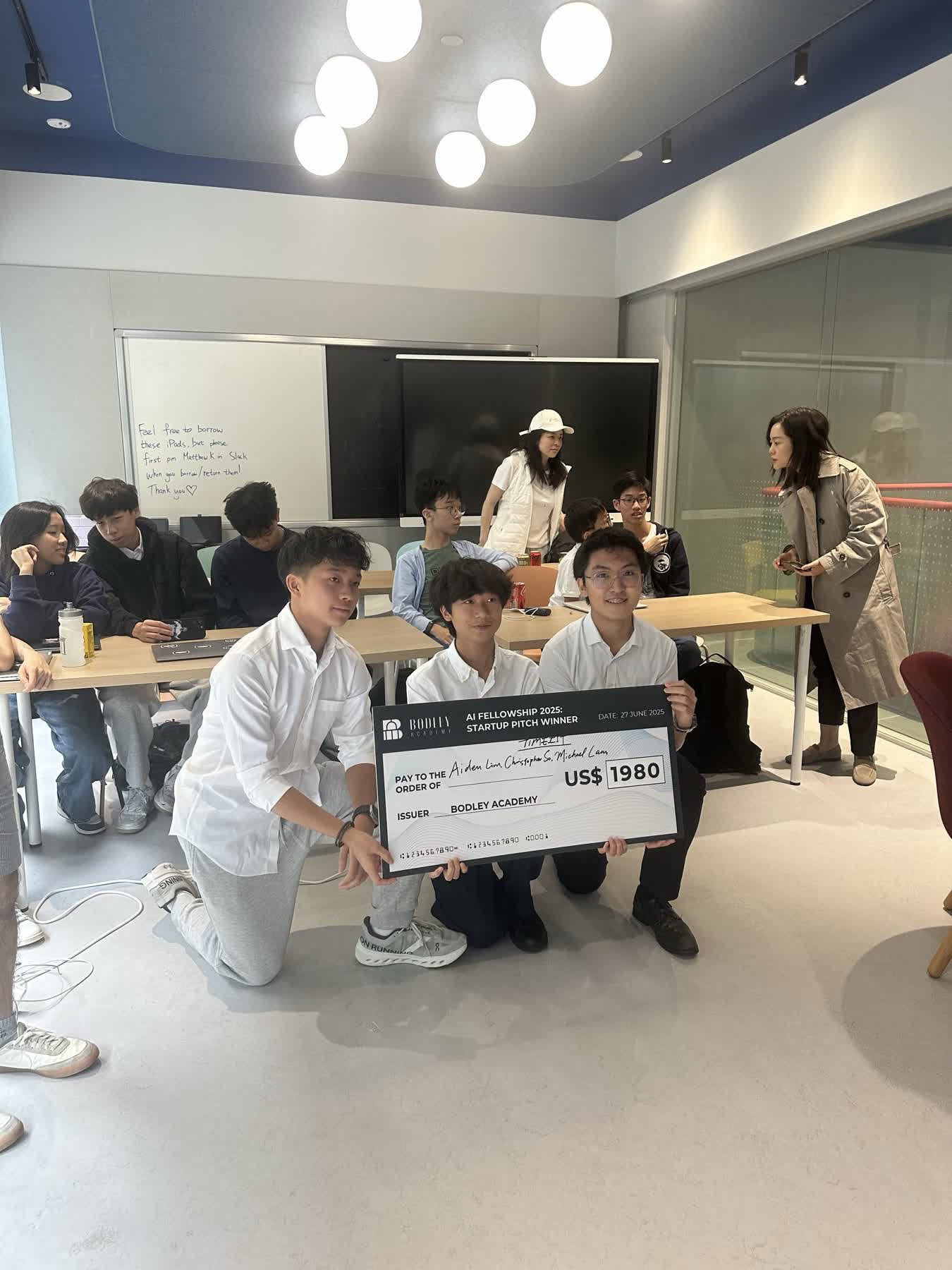
A previous cohort's winning team holding their startup-pitch prize cheque
The winning team

A previous cohort's winning team, with the cash prize from the closing startup-pitch competition.

This is what five days can make.
Apply for selection
§ 05 — The Faculty

Taught by someone
who has actually
done it.

Most summer programs are run by graduate students taking a side gig. This one is taught by a founder who has built and scaled real venture-backed companies across two continents — and who currently sits at the intersection of AI, education, and venture in Beijing.

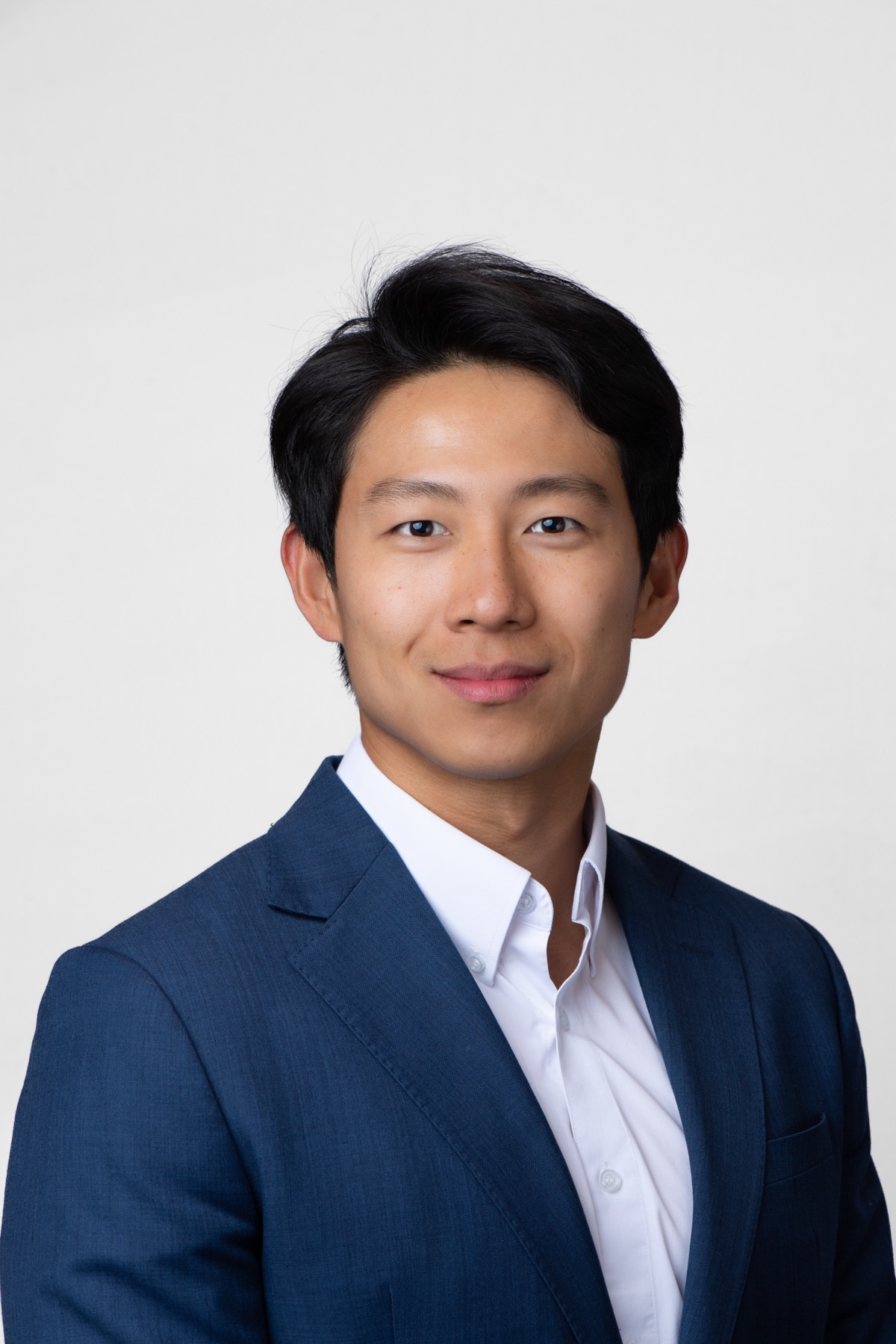
Phillip An
Phillip An
Director · Lead Instructor
CEO / Founder · Skylarq.ai

Phillip is the CEO and founder of Skylarq.ai — AI agents that turn the world's information into actionable prospecting at scale, through natural language. Previously he co-founded Homebase, the real estate technology company that democratized homeownership across Southeast Asia and became the first Vietnam-based company backed by Y Combinator, raising over $30M from Goodwater Capital, Partech Ventures, Antler, and VinaCapital Ventures. Before founding companies he worked at Goldman Sachs and McKinsey & Company. He has been shipping production AI systems since GPT-3 was a closed beta — and personally mentors every student in this cohort.

Founder · operator · alum
Y Combinator Harvard Tsinghua Goldman Sachs Caltech McKinsey & Company
Guest Faculty
Founders · operators · builders

Working founders from Silicon Valley and Beijing, designers and engineers shipping real products today, and current university students who have built things they're proud of — joining live on Zoom during the week. Full list shared at acceptance.

§ 06 — Who this is for

A small room.

Selection is by application. We choose for taste and tenacity, not test scores. Particularly interested in students who have already tried to build something — and got stuck.

  1. ISB students, ages 12–17
    Open exclusively to International School of Beijing students entering Grades 7–12 in fall 2026. No prior coding required — only curiosity.
  2. Bilingual welcome
    Instruction is in English. Mandarin support throughout. We expect a roughly even mix of Chinese, third-culture, and international students.
  3. For high schoolers in particular
    If you are entering Grade 10, 11, or 12 in fall 2026, this is sized for you. Earlier grades are welcome and benefit just as much — some of our strongest builders have been younger.
§ 07 — Selection

How we choose.

The cohort is capped at 32 seats. Selection runs in three clear stages — every application read on the same rubric, by Phillip and the teaching team. No first-come advantage, no queue-jumping.

Stage 01 — Apply
A two-minute online application. We respond within three working days with next steps — or a kind no.
Stage 02 — Interview
Shortlisted students have a short, friendly conversation with the teaching team — about what you want to build, not a test. Not every applicant is interviewed.
Stage 03 — Decision
Final offers go out by email. Decisions are final, and we will share the reasoning behind any decision on request — we would rather be transparent than popular.
What we look for
  1. 1 · Evidence of building
    Have you already tried to make something — an app, a club, a side project, a fundraiser — and run into a wall? We weight this first. Getting stuck is a qualification, not a flaw.
  2. 2 · The student's own voice
    We read the application answers for the student's curiosity and specificity — not the parent's. Seats go to students who genuinely want to be in the room.
  3. 3 · A real, specific idea
    "A study tool" is a start; "a tool that drills me on Mandarin tones before a test" is stronger. We look for a problem you actually have.
  4. 4 · Grade priority
    When strong applications tie, priority goes to Grades 10–12, then 8–9, then 7 — older students have less time left to build.
The finish line
A pitch competition — with cash prizes.
The week closes with a live showcase. Teams pitch their product to a panel of judges; the strongest teams win cash prizes, hosting credits, and a fast-track intro to Phillip's founder network.
Applications are read as they arrive.
Apply for selection
§ 08 — A note to parents

For the kid who
makes things.

AI has changed what a curious teenager can build. A 14-year-old can now ship a real app, a real tool, a real game — in one focused week — that used to take a small team of adults.

We are not promising anything beyond the week itself. What we promise is five focused days on a problem your child actually cares about, with a teaching team that has built and shipped real things, using the same tools the world's best builders use right now.

By the final afternoon, they walk out with something specific they made: a live AI product on a real URL, the code that built it, and the story of the decisions they made along the way. They keep all of it.

This is for the kid who already tries to make things — and gets stuck. We open the door, hand them the tools, and stay in the room while they cross the threshold.

Phillip and the teaching team handle the technical complexity. Your child handles the product — what to build, who it is for, and what it should feel like. That judgment is the part that compounds for the rest of their life.

§ 09 — Tuition

What it costs.

One flat tuition covers all five days — every AI tool, every credit, every meal, the live product, and the demo-day showcase. No hidden costs, no upsells. And we hold need-based scholarship seats in every cohort.

Standard
US$2,000
≈ ¥14,200 · per student · 5 days
For applications received after 15 June 2026, through to the 32-seat cohort cap.
Tuition includes

Everything a student needs for the week. They bring a laptop and an open mind — nothing else.

  • Every AI tool subscription and usage credit for the week
  • All software, deployment, and domain costs — the live product is paid for
  • Daily lunch and refreshments
  • Direct mentorship from Phillip and the teaching team
  • The Day 5 showcase, judging panel, and prize pool
  • A private alumni community and office hours through the school year
Need-based scholarships
We hold two to three fully or partially funded seats in every cohort for strong applicants for whom tuition would otherwise be the barrier. Selection is on merit alone — simply note that you would like to be considered, and we read your application exactly as we read every other.
Lock the early-bird rate — apply by 15 June.
Apply for selection
§ 10 — Questions

In brief.

I've never written a line of code. Am I out of my depth?+
No. This week is designed for students with zero coding background. AI tools handle the syntax — what you bring is taste, persistence, and willingness to iterate. The students who ship the strongest work are usually the ones who'd never opened a code editor before Day 1.
What will I actually walk out with on the final day?+
A real, live product — your AI-powered app, website, or tool, deployed on its own domain. A pitch video where you explain what you built and why. A founding-team artifact: the company you started, the problem it solves, your first users. Day 5 closes with a showcase — a panel picks a winning team and they leave with a prize.
Is using AI just cheating?+
No — we teach craft, not shortcuts. You explain every architectural decision live on Day 5. You'll know exactly what your code does, why each piece is there, and what tradeoffs you made. The point is leverage, not replacement.
Do I own what I build?+
Yes. You own all of it — code, designs, brand, IP. We help you ship under your own name, on your own domain, with your own Stripe account if you want to charge for it. The company is yours when you walk out on Day 5.
What do I need to bring?+
A laptop (Mac or Windows, nothing special). An open mind. A rough idea is helpful but not required — half the cohort discovers their idea on the morning of Day 1. We provide everything else: tools, AI credits, food, mentors.
What about a recommendation letter?+
For students who really show up during the week, Phillip is happy to write a personal letter speaking specifically to what you built, the decisions you made, and how you handled getting stuck. Optional, earned, and never promised — it's yours to use however you'd like.
What happens after the week ends?+
You keep your product. You keep your code. You join a private alumni Slack with the rest of the cohort and a handful of Phillip's founder friends. Office hours stay open through the school year for anyone who wants to keep building.
What's the cost?+
Tuition is US$2,000 for the five days — or US$1,700 at the early-bird rate if you apply by 15 June. It covers every tool, credit, meal, the live product, and the demo day. See the Tuition section above for the full breakdown. Need-based scholarships are available — just note your interest in the application.
§ 11 — Apply

Thirty-two seats.
One application away.

The application takes two minutes. Phillip and the teaching team read every one and reply within three working days — with next steps, or a kind no.

Apply for selection
Questions — phillipan14@gmail.com